Gender Equality (SAMANATA) Project
July 10, 2025Project Introduction
The “Ending Domestic Violence through Community Mediation and Dialogue” project is a peacebuilding and social justice initiative implemented by Sunwal Community Development Centre (SCDC) with financial and technical support from United Mission to Nepal (UMN), Nawalparasi Cluster. It is being implemented in Palhinandan Rural Municipality (Wards 1 to 4) of Nawalparasi West.
The project aims to reduce domestic violence and harmful social practices by strengthening inclusive local mechanisms for dialogue, mediation, and conflict transformation. It brings together people from diverse gender, caste, religion, age, and social backgrounds into structured monthly discussion groups. These groups first build trust by discussing common community issues and then gradually begin addressing more sensitive topics such as gender-based violence and social discrimination.
The project envisions empowered communities that can collectively reflect, speak out, and act against injustice and violence. It also strengthens local peace actors—such as community mediators, women leaders, political and religious leaders—through capacity building and joint learning processes.
Furthermore, the project works closely with Judicial Committees at the Rural Municipality level and engages influential stakeholders including teachers, journalists, and ward officials to promote early response to gender-based violence and foster interfaith harmony. Through this multi-stakeholder and participatory approach, the project promotes peace, justice, and inclusion at the household, community, and governance levels.
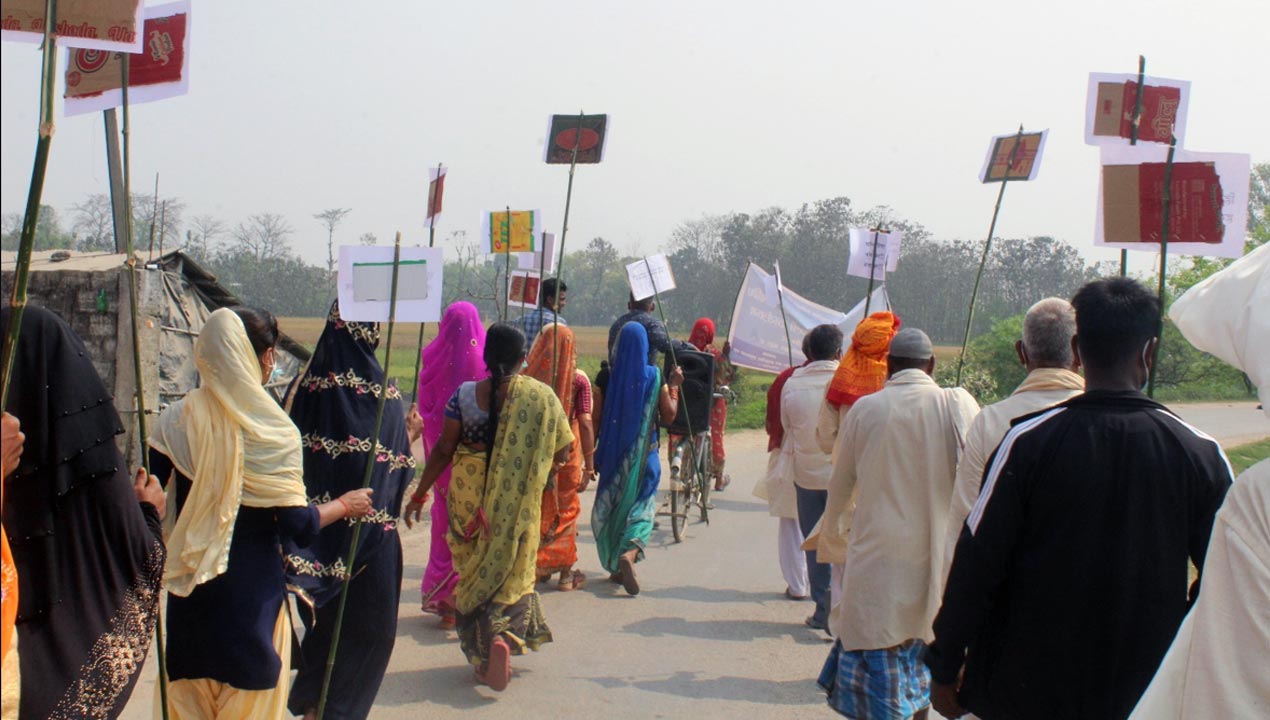
Project Area and Coverage:
Location: Palhinandan Rural Municipality, Wards 1–4, Nawalparasi (West)
Total active groups: 20
Active intefaith network: 1 (Ekata Interfaith Peace Network)
Target participants:The direct participants or primary stakeholders of this project will be:
⦁ Daughters-in-law
⦁ Husbands
⦁ In-laws,
⦁ Marriageable young people (sons and daughters)
⦁ Parents of marriageable sons and daughters, especially poor and average families
⦁ Dalit
⦁ Muslim
⦁ Madhesi
Boundary partners: Following are the boundary partners:
⦁ Women Groups (wives, mother in laws, sister in laws, from different faiths)
⦁ Couples (husband and wives, from different faiths)
⦁ Youth groups (gender-mixed, from different faiths and casts)
⦁ Safe house/women’s cell/unit
⦁ Community mediators (existing)
⦁ School and madrasa teachers
⦁ RM Judicial Committee members and ward officials
⦁ Influential political and religious leaders
Strategic partners: Following are the strategic partners:
⦁ Palinandan Rural Municipality
⦁ District Administrative Office
⦁ District Police office
⦁ District Coordination Committee
⦁ Journalists
⦁ Local NGO's and community-based organizations (CBO's)
The main Activities of the project:
⦁ Group formation and capacity building through group action, reflection, and support
⦁ Capacity building of religious leaders and community leaders to resolve conflict and address domestic violence
⦁ The project supports Judicial Committees at the RM level to effectively carry out their constitutional mandate of addressing gender-based violence early and promoting peace.
⦁ The project works to enhance the capacity of local peace actors, including community mediators, women leaders, political representatives, and religious leaders.
⦁ Participatory monitoring, learning and documentation by community groups
⦁ Capacity building on the group empowerment process through participatory action reflection
⦁ The project team carries out regular formal reviews and reflections to assess what strategies are effective and where improvements are needed.
⦁ Self-reflection and realization session to the couples about gender roles
⦁ Self-care and strengthening family relationship training to survivors
⦁ IG support to identified DV survivors and needy women and girls
⦁ Day Celebration (International Peace day, Womens day, Human rights day and Youth day)
The main Activities of the project:
⦁ Project has directly reached a total of 1,750 individuals through its various group sessions, orientations, trainings, and community-based dialogue activities. Among them, 845 are male and 905 are female, while 12 participants are persons with disabilities. The project embraces diversity and inclusion, with participants representing various caste, ethnic, and religious backgrounds. This includes 407 Dalits, 808 Madhesis, 404 Muslims, 54 Janajatis, and 19 Brahmin/Chhetri/Thakuri individuals. Additionally, 58 participants belong to other minority groups. The participation of these diverse groups highlights the project’s commitment to inclusive engagement, fostering dialogue and cooperation across faiths, castes, and cultures to build a peaceful and just society.
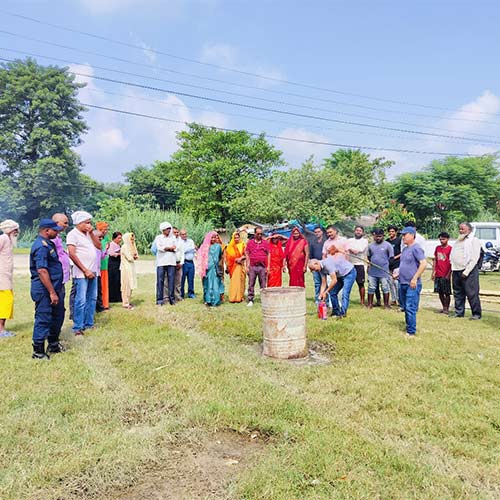
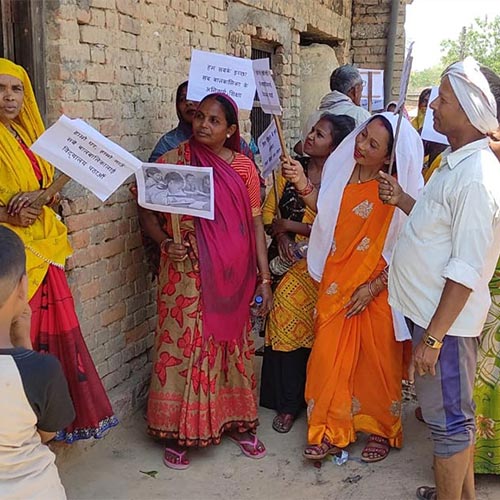
⦁ 20 active groups (including 8 interfaith women’s groups, 4 youth groups, 4 religious leader groups, and 2 each of husbands’ and wives’ groups) have been conducting regular sessions on women’s rights, gender inequality, the causes and impact of domestic violence, and community peacebuilding initiatives.
⦁ Through these groups, a total of 370 participants (240 women and 130 men, including 200 Hindus, 137 Muslims, 3 Christians, and 30 Buddhists) have been engaged. Among them, 10 persons with disabilities (4 women and 6 men) and 4 caregivers of persons with disabilities are actively participating. Group members now identify and address community issues through regular monthly meetings.
⦁ After receiving orientations on domestic violence prevention, women’s rights, dialogue processes, and peacebuilding, group members have actively contributed to community cooperation and violence reduction.
With the leadership of group members, the following dispute resolutions and social changes have been achieved:
⦁ 33 cases of domestic violence resolved
⦁ 2 cases of gender-based defamation addressed
⦁ 7 household-level disputes resolved
⦁ 1 case related to crop damage, 1 case of public land encroachment, and 1 case of firewood theft mediated
⦁ 4 cases of child marriage prevented
⦁ 5 marriages conducted without dowry
⦁ 12 women who previously lacked citizenship documents successfully acquired them
⦁ 2 cases of possible separation/divorce resolved through mediation by women’s groups
⦁ 3 cases of attempted polygamy prevented
⦁ 4 adolescents and youth supported and motivated to come out of substance abuse
⦁ 9 out-of-school girls reenrolled in school with the help of women and youth groups
Group members have demonstrated effective conflict resolution skills through dialogue, and in some cases, referred unresolved issues to the police for further support. The leadership capacity of women and youth has significantly improved, resulting in their meaningful participation in other community structures as well. Interfaith and intercultural dialogue has fostered an environment of trust in the community, where religious leaders are now openly expressing their commitment toward religious harmony and peaceful coexistence. The Ekata Interfaith Peace Network is actively working to sustain the project's components and is currently in the process of being formally registered as a legal entity, with its constitution under development.