Ending Domestic Violence through Community Mediation and Dialogue (BPI Project)
July 9, 2025
Disability Inclusive Development (DID) Project
July 10, 2025Project Introduction
The vision of the Samanata Project (Equality) is to build a joyful and equitable society for girls, boys, women, and men free from violence against women, harmful practices, and discrimination.
The project is being implemented in Palhinandan Rural Municipality, Nawalparasi. Through a participatory program development process, the project focuses on addressing two major issues:
1. Domestic violence 2. Dowry marriage practices
The main changes the project envisages are the empowered groups of daughters-in-law (who have the lowest status and highest vulnerability), husbands and in-laws (whose attitude and behaviour change are essential for addressing the gender issues) working together with multi stakeholders to address the incidences of violence against women. Also the action reflection process will empower community groups themselves to take actions in their daily lives to change discriminatory practices against girls and women.
Target Participants: The direct participants or primary stakeholders of this project will be:
⦁ Daughters-in-law
⦁ Husbands
⦁ In-laws,
⦁ Marriageable young people (sons and daughters)
⦁ Parents of marriageable sons and daughters, especially poor and average families
⦁ Dalit
⦁ Muslim
⦁ Madhesi
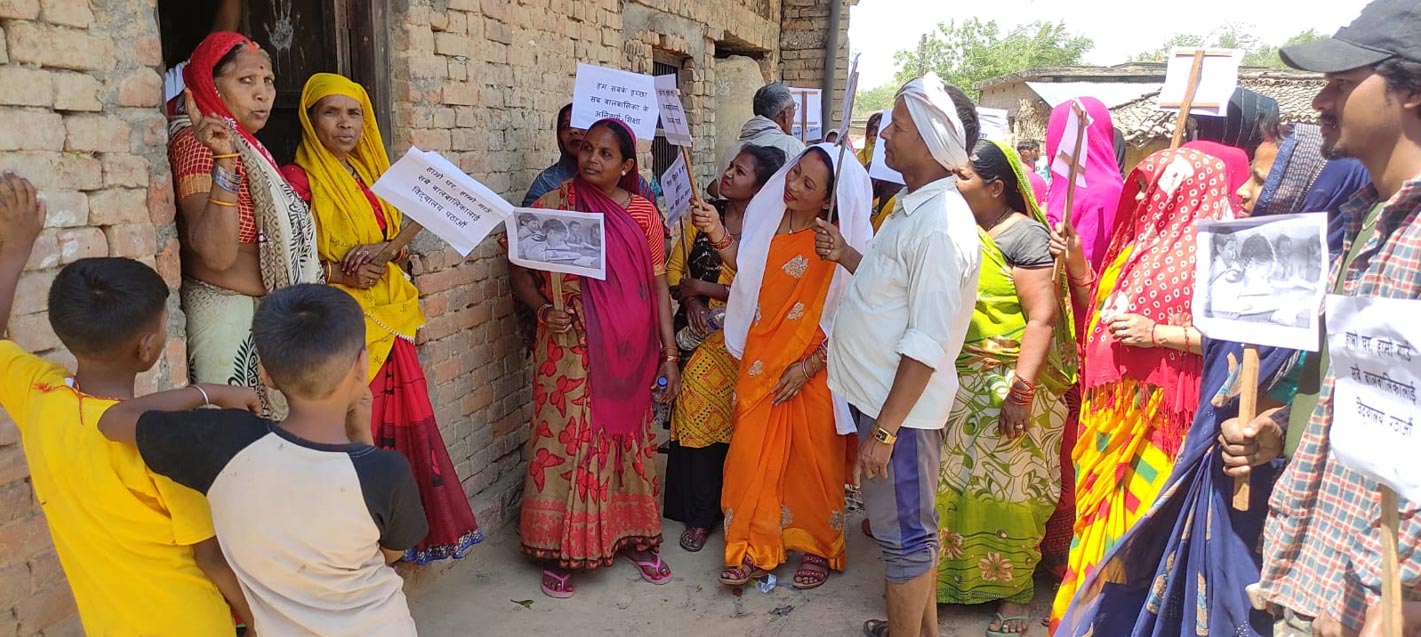
The main Activities of the project :
⦁ Group formation and capacity building through group action, reflection, and support
⦁ Participatory monitoring, learning and documentation by community groups
⦁ Capacity building on the group empowerment process through participatory action reflection
⦁ Coordinate and collaborate with local government and non -non-governmental organisations for GEDSI policy and “invest in girls' education, not in dowry" policy and resource allocation
⦁ Support income generation start-up for poor women, especially the survivors of domestic violence
The main achievements of the project :
⦁ A total of 1,795 individuals attended at least two sessions on harmful traditional practices against women, including gender-based violence
⦁ 24 women shared their stories of becoming free from physical violence by their husbands and in-laws with the support of their groups, and 20 women obtained their citizenship certificates after understanding the importance
⦁ Thirteen couples, sons and daughters of group members, married without exchanging dowries.
⦁ 50 underprivileged girls from marginalised households (Muslim, Dalit, and poor families) received school materials support from the project, which enabled them to attend school regularly and further contributed to reducing dowry practices at the community level
⦁ 150 group members, including community leaders, have publicly pledged and committed to ensuring that their children marry without dowries and promote gender equality